Peeling paint, repeated filling or cracks returning through decoration
Cracked or spalling brick faces and hard, failing cement pointing
Persistent wet masonry or rain-related internal damp patches
How we approach it
01Assess the wall, coatings, mortar and other sources of wetting before choosing repairs.
02Agree trial areas and a suitable cleaning or paint-removal method that protects the brick surface.
03Repair or replace damaged bricks as appropriate and replace unsuitable cement pointing with a compatible lime mortar.
An example to help you decide
Look beyond the paint before choosing a repair.
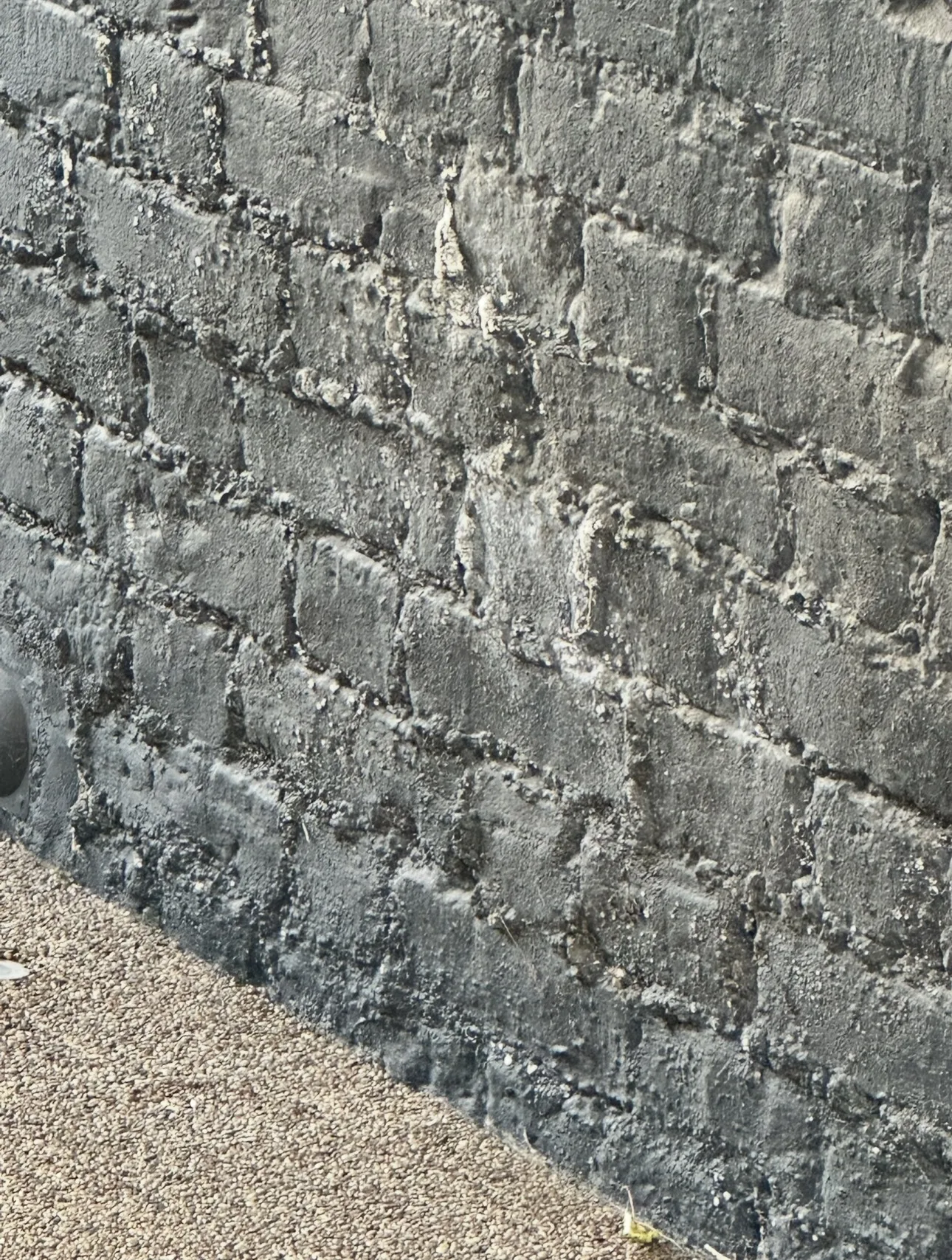
This video from our work shows an example of painted external brickwork. Use it alongside the guidance below to understand why the wall’s materials and moisture condition matter before covering defects again.
A neat coat of paint is not evidence that the masonry beneath is sound or dry. Repeated filling and painting can conceal cracking, deteriorating pointing or damaged brick faces without dealing with the cause.
The example is not a before-and-after sequence or proof that every painted wall has the same defect. We assess each property before specifying removal or repairs.
An example from Damp Proofing Services London. Press play to watch with sound; playback does not start automatically.
A brickwork project
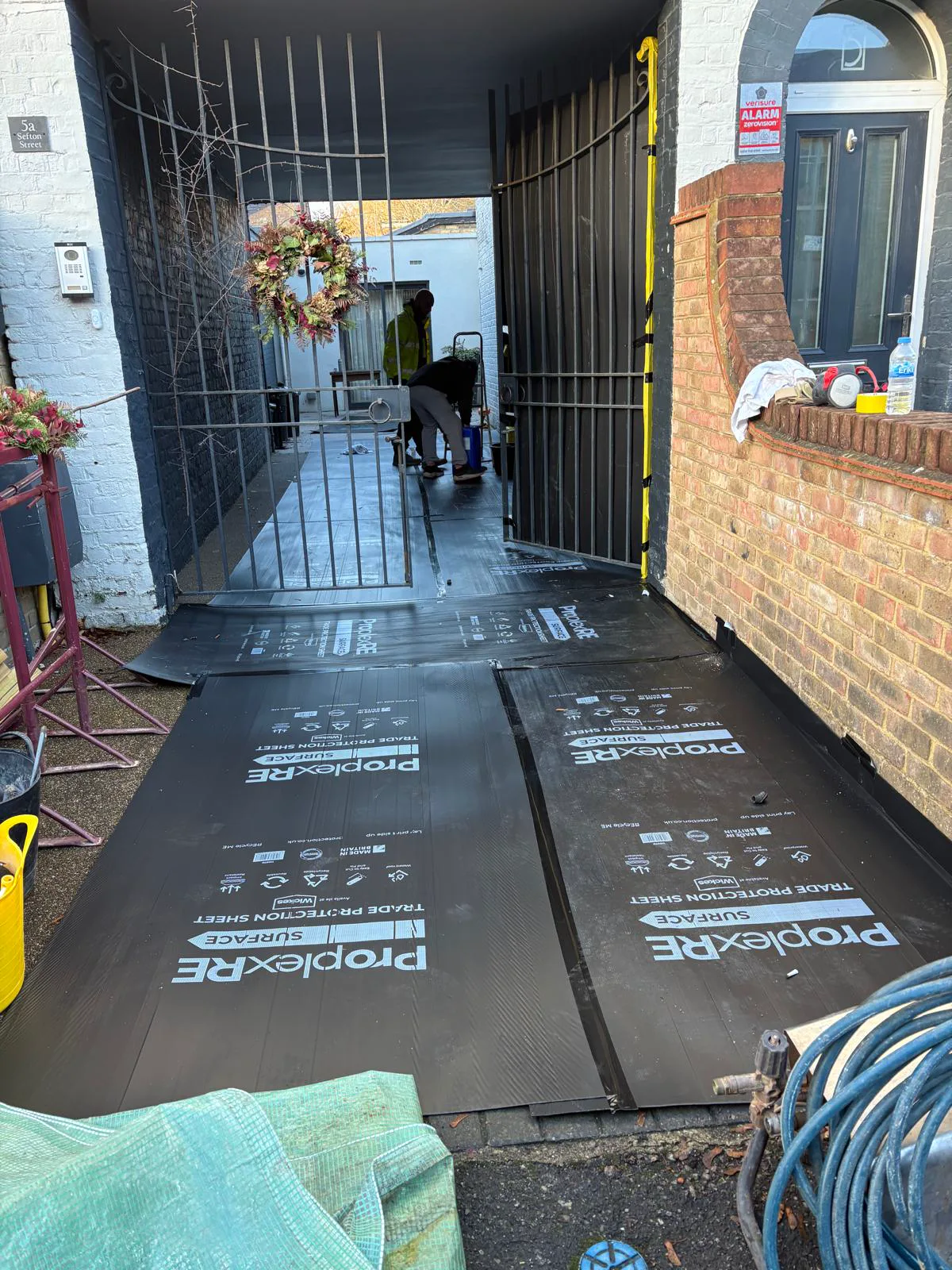
Site protection and brick cleaning in progress.
The photo shows protection in place, and the short clip shows brick cleaning in progress. The suitable cleaning or paint-removal method depends on the brick, coating and condition, so we assess the wall and use suitable test areas before specifying work.
Protective boards and sheeting laid over the entrance approach before exterior masonry work.A short view of exterior brick cleaning work in progress. The clip is illustrative; it does not specify a cleaning system for other properties.
Traditional solid walls
Keep rain out. Allow moisture to dry out.
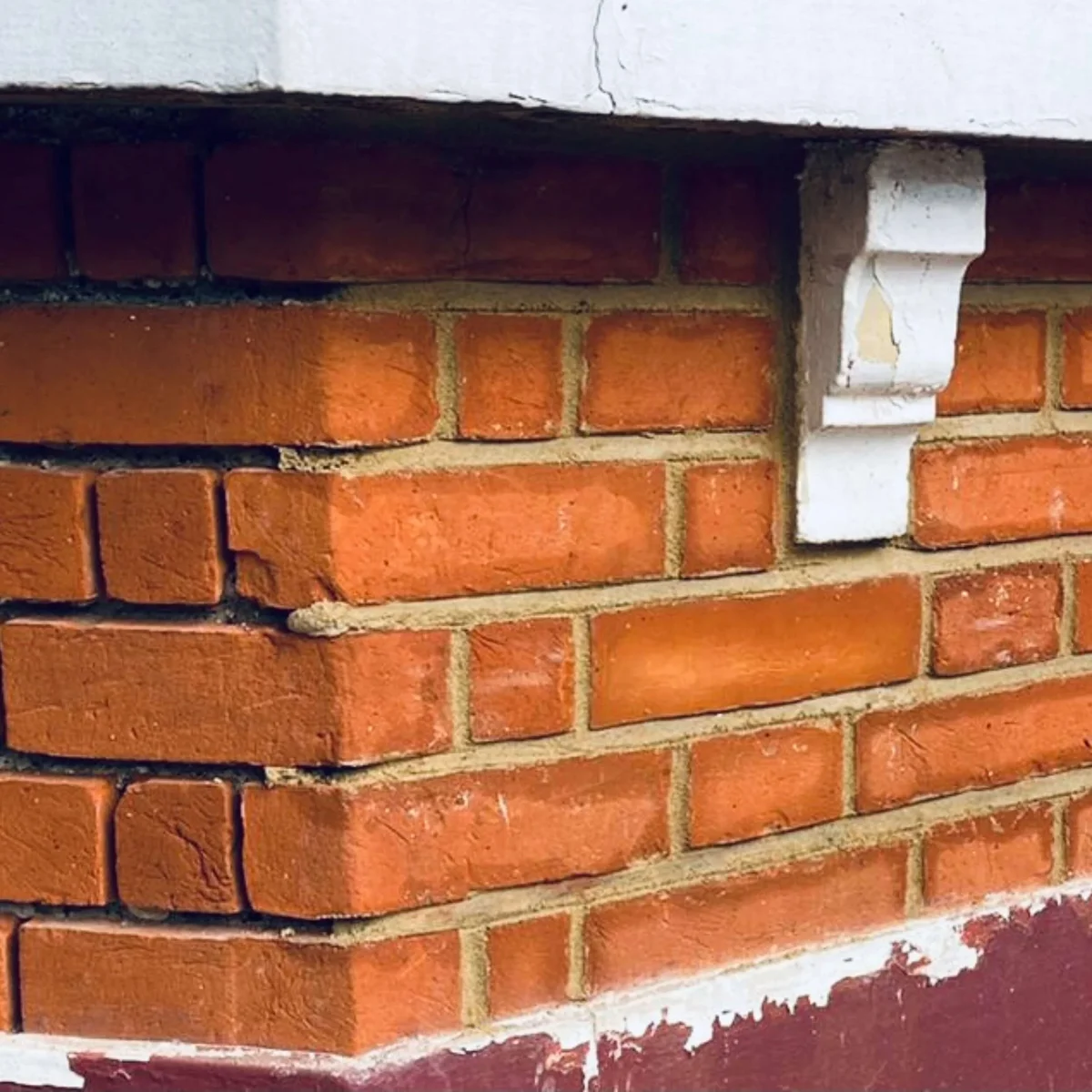
Damaged brick faces, open joints and peeling paint highlight why the condition of the masonry should be assessed before choosing repairs or applying another coating.
Why external drying matters
Traditional solid-brick walls have no cavity separating the external masonry from the inner wall. They manage moisture by shedding rain, temporarily absorbing some moisture and drying between wetting events. External evaporation is an important part of that process, although walls can also dry towards the inside where finishes and conditions allow.
A compatible lime mortar provides permeable joints through which moisture can move and evaporate. It should suit the strength and porosity of the bricks and the wall’s exposure. “Breathable” does not mean waterproof, and repointing cannot compensate for an unrepaired roof leak or overflowing gutter.
Paint removal: assess and test first
Low-permeability paint, dense cement-rich pointing and incompatible cement renders can restrict drying. Water may still enter through cracks or defective junctions and remain in the wall for longer. Hard pointing can also be less able to accommodate movement and may concentrate weathering in softer brick faces.
The answer is not to strip every wall indiscriminately. We assess the coating, original materials, condition and risk of removal, then use a suitable test area before recommending a method. Some cleaning or stripping techniques can permanently damage soft brick faces or historic finishes.
Frost, salts and spalling bricks
When retained water freezes, expansion can exert pressure within vulnerable masonry. Repeated freezing and thawing can contribute to cracking and the loss of brick faces, known as spalling. Salts crystallising within the masonry can also cause deterioration.
Fillers and paint may hide the surface damage while moisture remains. Addressing persistent wetting and selecting compatible repairs is more important than covering the symptoms. Not all spalling is caused by frost, so the cause needs assessment.
A drier wall and thermal performance
Wet masonry generally conducts heat more readily than dry masonry. Reducing persistent wetting and allowing a wall to dry can improve its thermal performance and may improve internal surface temperatures under comparable conditions.
This is not the same as removing a structural or geometric thermal bridge at a lintel, junction or cold corner. Cleaning and repointing are not insulation, and cannot guarantee that condensation will disappear. Ventilation, heating, insulation and the building’s construction still matter.
Restore a drying route through compatible mortar joints and exposed or suitably finished masonry.
Reduce rain entry where defective pointing, cracks or damaged bricks are contributing to penetrating damp.
Reduce conditions that encourage frost damage and salt-related deterioration by addressing persistent wetting.
Help protect traditional brickwork and reveal defects that repeated filler and paint may have hidden.
Improve the moisture-related thermal performance of a previously wet wall as it dries, without promising a particular energy saving.
Costs, risks and practical considerations
Removal can expose extensive hidden damage, increasing the scope and cost of repairs.
Aggressive blasting, high-pressure washing or unsuitable chemicals can permanently damage brick faces. Trial areas and a suitable method are important.
Work can involve dust, debris, noise and access equipment; older coatings may need lead or other hazardous-material checks.
Lime mortar needs appropriate curing and protection from frost, heavy rain and rapid drying. Scheduling is weather-dependent.
Saturated walls can take time to dry after repairs. Roof leaks, gutters, ground levels, salts or internal finishes may need separate attention.
Listed buildings or protected features may need consent before cleaning, stripping coatings or changing materials.
Repair specification before a cosmetic finish.
We discuss what is suitable for the wall, including the cleaning method, mortar compatibility, damaged brick repairs and whether further specialist investigation is needed. Significant movement or structural cracking needs assessment rather than simply filling and repointing.
Why use lime mortar on traditional solid brick walls?
A suitably specified lime mortar is generally more permeable and accommodating of small movements than an incompatible hard cement-rich pointing mix. It can help moisture dry through the joints and protect softer bricks. The correct strength, aggregate and lime type depend on the masonry and exposure; lime is not a waterproof coating.
Should all paint, cement pointing and render be removed?
No. We assess compatibility, condition and the risk of removal first. Dense, low-permeability coatings can slow drying, but not every painted or rendered wall needs stripping. Test areas help establish a suitable method and whether removal could damage soft brick faces or historic finishes.
Will this prevent penetrating damp and remove thermal bridging?
Repairing defective brickwork and restoring drying can reduce rain penetration and moisture retention where those defects contribute to the problem. Wet masonry generally conducts heat more readily than dry masonry, so drying can improve thermal performance. It does not remove a geometric or structural thermal bridge, guarantee warmer surfaces in every situation, or replace insulation and ventilation where needed.
Can fillers and a fresh coat of paint fix spalling bricks?
They may conceal the damage without resolving water entry, salt action or frost deterioration. A lasting repair requires the cause to be addressed and a compatible brick repair or replacement specified where appropriate. Significant cracks, bulging or movement may require structural assessment.
How much does brick restoration cost?
The price depends on the area, condition, access, coating removal and repair specification. Contact us with photographs and the property location to discuss an assessment and quotation. Brick restoration is a separate service from damp and timber surveys.
Discuss your property
Plan the right repair for your brickwork.
Send the property location and photographs of the brickwork. We’ll discuss an assessment, suitable methods and a property-specific quotation. Restoration work is quoted separately from damp and timber surveys.